


TURNING WASTE INTO ENERGY IN INDONESIA: BETWEEN OPPORTUNITIES AND CHALLENGES
The Indonesian government has recently assigned the national investment fund Danantara Indonesia (Daya Anagata Nusantara) to implement an ambitious program: turning waste into electricity. This move represents Jakarta’s determination to cut emissions, aim for net zero, and marks a turning point in the clean energy transition strategy of Southeast Asia’s largest economy.
From waste crisis to renewable energy pivot
According to Reuters, Indonesia generates around 35 million tons of waste each year, yet more than 60% of that is not properly treated. Open-air landfills, particularly around Jakarta and Surabaya, have become “environmental bombs” emitting methane — a greenhouse gas with roughly 25 times the warming potential of CO₂ over 100 years — polluting air, groundwater, and soil.
In response, Danantara Indonesia announced plans to launch the first eight waste-to-energy (WTE) plants by the end of October 2025, beginning a chain of 33 plants across major cities. “This programme will be rolled out across 33 cities, with priority on Jakarta. Other regions on Java and Bali will follow,” said CEO Rosan Roeslani.
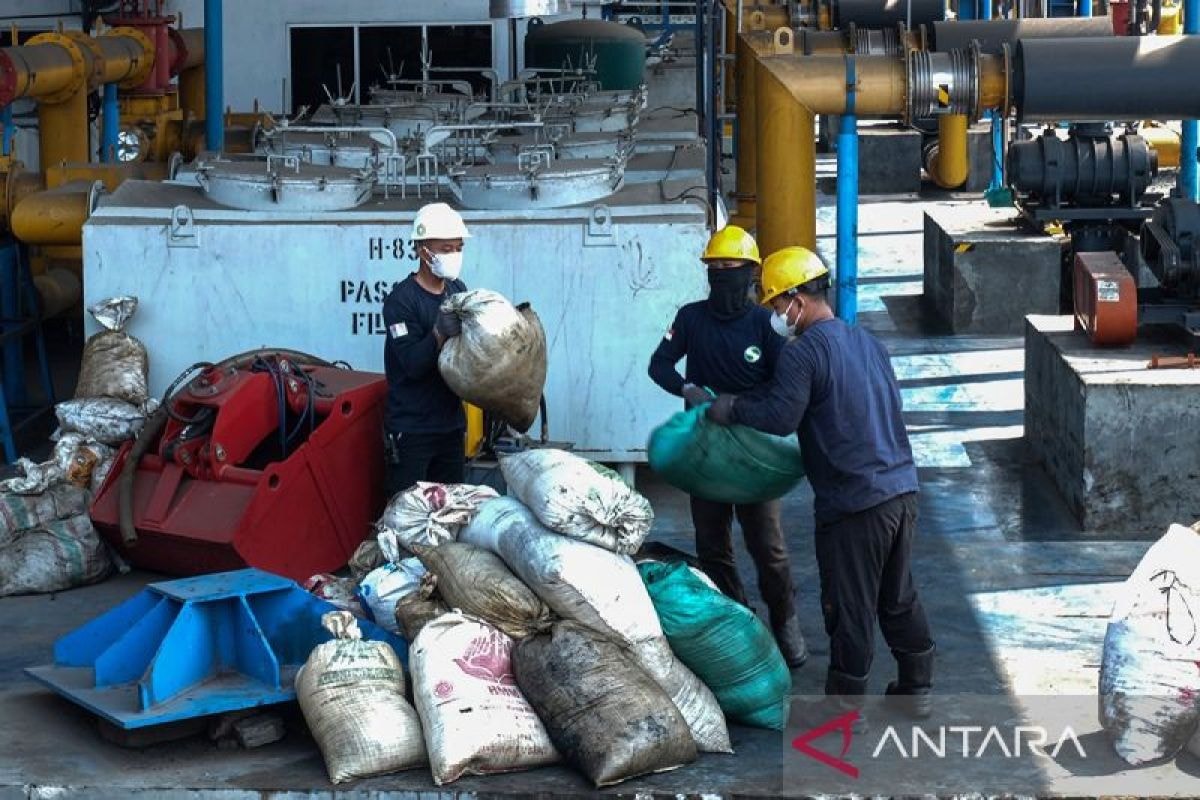 Each plant is planned to handle 1,000 tons of waste daily and generate 15 MW of power—enough to supply tens of thousands of households. The produced electricity will be purchased by the national utility PLN, ensuring a stable offtake for investors. Investment is estimated at 2–3 trillion rupiah (approximately 123–185 million USD) per plant, depending on technology and associated infrastructure, according to Danantara investment director Stefanus Ade Hadiwidjaja.
Construction is expected to take 18–24 months, and the project promises to create thousands of local jobs during construction and operation.
This plan falls within the National Electricity Supply Programme 2025–2034 and targets 453 MW of power from waste—total investment about 2.72 billion USD. To encourage local governments’ participation, the government has waived waste-treatment fee requirements, only requiring cities to provide around 5 hectares of land for each plant; Danantara will handle feasibility studies and engineering.
Danantara’s involvement—being a state-owned investment fund—is seen as a major boost for the national energy transition, which is currently struggling due to heavy coal dependence. According to East Asia Forum, renewables currently account for only 13.9% of Indonesia’s total installed capacity, while coal remains over 60%. The WTE projects are expected to help the country move toward its goal of 23% clean energy by 2025 and net zero emissions by 2060.
As Rosan Roeslani asserted in The Jakarta Post: “This is the circular economy model Indonesia is aiming for… Waste is no longer a burden but becomes a resource, creating energy and jobs for people.”

Benefits go hand-in-hand with challenges
According to Danantara’s estimates, WTE plants can reduce up to 80% of greenhouse gas emissions compared to conventional landfilling and cut landfill area by up to 90%. Each 1,000 tons of waste processed produces around 100–150 tons of ash, most of which can be reused in construction materials.
Channel NewsAsia, quoting Danantara’s internal sources, notes that once 33 plants are operational, the programme could cut about 30 million tons of CO₂ equivalent annually, while supplying nearly 500 MW of stable renewable power—roughly the capacity of a medium-sized coal-fired plant.
Beyond environmental benefits, the projects generate broad socio-economic impacts: each plant employs hundreds of local workers. According to Antara News, Stefanus Hadiwidjaja noted: “The spill-over effect from job creation and infrastructure investment may be many times the initial investment.” This also opens an opportunity for Indonesia to attract international ESG (environmental, social, governance) capital. Bloomberg recently reported that Danantara is dedicating 20% of its total investment capital to renewable energy projects, with waste-to-energy as its spearhead.
However, many challenges remain. One key issue is waste quality and source segregation. Research presented at the International Conference on Sustainable Energy, Water, and Environment Systems (SDEWES, 2025) found that Indonesian waste is high-moisture and poorly sorted, which reduces combustion efficiency and increases energy consumption. In addition, public awareness of waste separation is still limited, requiring large-scale national awareness campaigns.
On the financial side, The Jakarta Post reports that if the electricity purchase price from PLN is not attractive enough or power purchase agreements (PPAs) are delayed, the projects could face cash-flow difficulties.
Another important technical factor is the treatment of bottom ash and flue gases post-combustion. Experts warn that ash from WTE incineration often contains heavy metals and potential pollutants, and must be treated and quality-checked strictly before reuse in construction materials to avoid secondary contamination. At the same time, Indonesia needs to expedite regulatory framework adjustments, streamline administrative procedures and apply green tax incentives for investors.
From a technology standpoint, Danantara is also considering co-combustion of waste with biomass to boost efficiency and reduce emissions. Indonesia has biomass potential from agricultural residues reaching tens of gigawatts if properly exploited. This opens a dual path: reducing waste and diversifying clean energy sources, cutting coal dependence.
In addition, air-pollution risk remains a concern. A Mongabay report from August 2025 noted that some areas in East Java recorded slight rises in fine particulate matter (PM2.5) around WTE plants — though still within allowable limits. Experts recommend the government publish emission data online in real-time and implement independent monitoring to strengthen community trust.
— Source: EVN Ha Noi